Journal Paper (20)

Temporal multi-stage energy pumping

As an important theoretical concept, temporal boundaries provide researchers with new insights for tailoring electromagnetic waves in the time domain. Because a temporal boundary breaks the time translation symmetry, a source is necessary to satisfy energy conservation. In this Letter, we quantify the relationship between refractive index contrast and the required energy exchange. More specifically, to realize a temporal boundary with a large refractive index contrast, a correspondingly large and abrupt energy exchange is required. Considering this practical difficulty, we propose to mimic a large-contrast temporal boundary by staggering a series of small-contrast temporal boundaries separated by carefully designed durations.

Continue reading...

Generalized Temporal Transfer Matrix Method: A Systematic Approach to Solving Electromagnetic Wave Scattering in Temporally Stratified Structures

Opening a new door to tailoring electromagnetic (EM) waves, temporal boundaries have attracted the attention of researchers in recent years, which have led to many intriguing applications. However, the current theoretical approaches are far from enough to handle the complicated temporal systems. In this paper, we develop universal matrix formalism, paired with a unique coordinate transformation technique. The approach can effectively deal with temporally stratified structures with complicated material anisotropy and arbitrary incidence angles. This formulation is applied to various practical systems, enabling the solution of these temporal boundary related problems in a simple and elegant fashion, and also facilitating…

Continue reading...

Analytical transient analysis of temporal boundary value problems using the d’Alembert formula

Temporal boundary value problems (TBVPs) provide the foundation for analyzing electromagnetic wave propagation in time-varying media. In this paper, we point out that TBVPs fall into the category of unbounded initial value problems, which have traveling wave solutions. By dividing the entire time frame into several subdomains and applying the d’Alembert formula, the transient expressions for waves propagating through temporal boundaries can be evaluated analytically. Moreover, unlike their spatial analogs, TBVPs are subject to causality. Therefore, the resulting analytical transient solutions resulting from the d’Alembert formula are unique to temporal systems. Read more Wending Mai and Douglas H. Werner

Continue reading...

A knotted metamolecule with axisymmetric strong optical activity

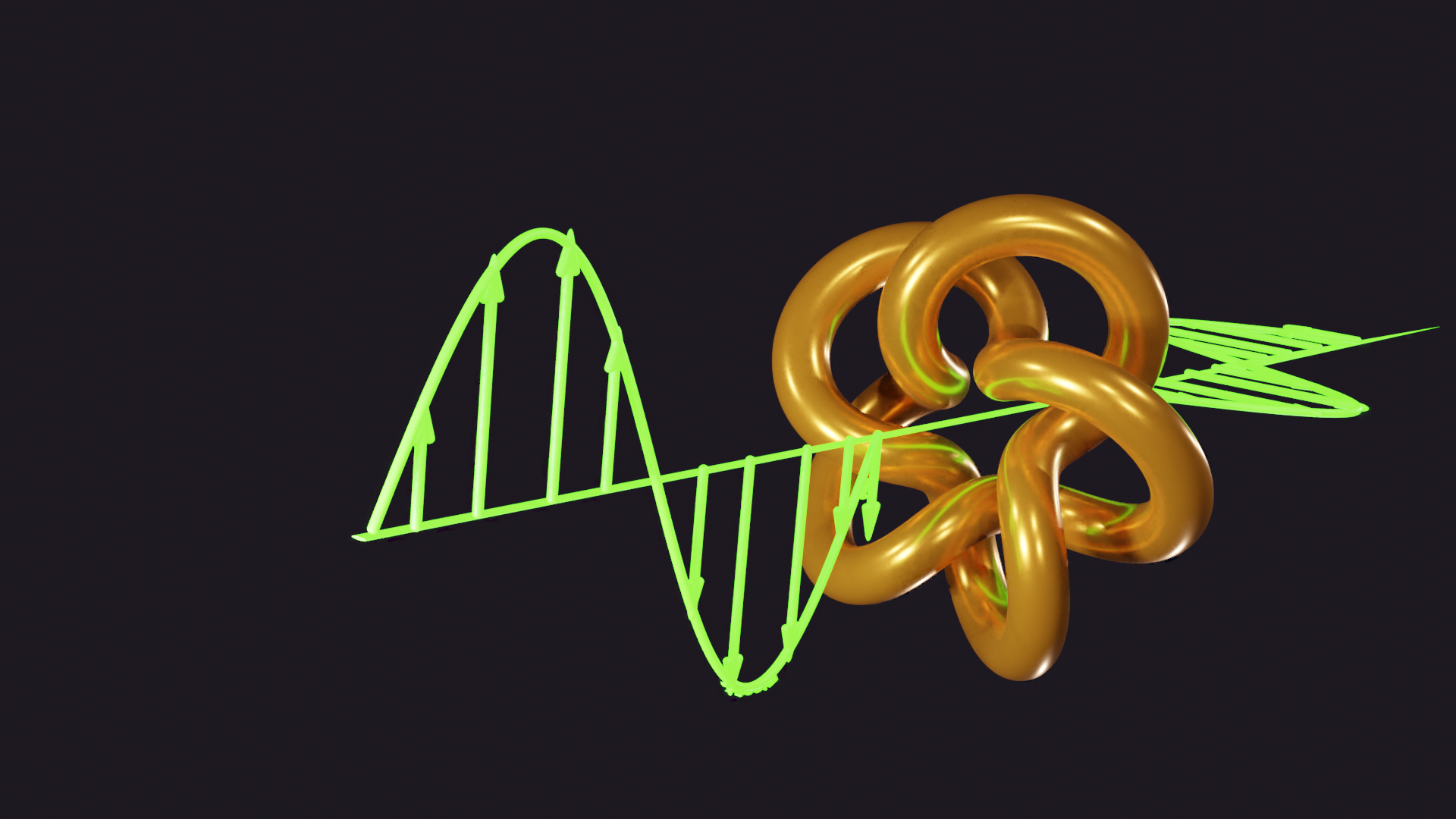
Optical activity is the ability of chiral materials to rotate linearly polarized electromagnetic waves. A knotted chiral metamolecule is introduced here that exhibits strong optical activity corresponding to a 90° polarization rotation of the incident waves. More importantly, the torus knot structure is intrinsically chiral and multifold axisymmetric. Consequently, the observed polarization rotation behavior is found to be independent of how the incident wave is polarized. The metamolecule is fabricated through selective laser melting and experimentally validated in the microwave spectrum. This work represents the first ever metamolecule to be reported that is intrinsically axisymmetric and capable of simultaneously exhibiting…

Continue reading...

Conductive mixed-order generalized dispersion model for noble metals in the optical regime

Various dispersion models can be expressed as special cases of the Generalized Dispersion Model (GDM), which is composed of a series of Pade polynomials. While important for its broad applicability, we found that some materials with Drude dispersive terms can be accurately modeled by mixing a 1st order Pade polynomial with an extra conductivity term. This conductivity term can be separated from the auxiliary differential equation (ADE). Therefore, the proposed mixed-order model can achieve the same accuracy with fewer unknowns, thus realizing higher computational efficiency and lower memory consumption. For examples, we derive the model parameters and corresponding numerical errors…

Continue reading...

Antireflection temporal coatings: comment

The quarter-wavelength matching technique is widely used because it minimizes the reflection while it maximizes the transmission. The recently introduced antireflection temporal coatings (ATCs) [Optica7, 323 (2020)10.1364/OPTICA.381175] have been considered as its temporal analog. However, our study shows that by introducing an ATC, not only will the reflection be reduced but also the transmission. This phenomenon is opposite its spatial counterpart, which indicates that ATCs are more than simply a temporal dual of quarter-wavelength matching. This is a direct consequence of the different physical phenomena that are manifested in the temporal and spatial domains. Read more Wending Mai,* Jingwei Xu,…

Continue reading...